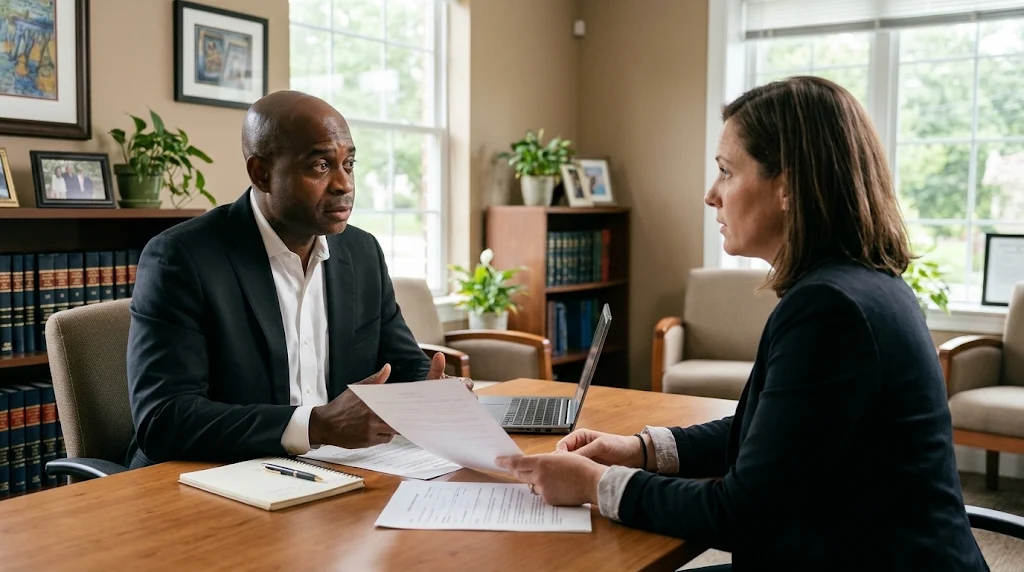


When we ask, “What is Sole custody in Maryland?” it means one parent has primary authority over a child’s life, whether that covers major decisions, where the child lives day to day, or both. It is not a legal punishment for the other parent, and it does not automatically cut off their relationship with the child. Maryland courts use it when equal sharing isn’t workable, safe, or in the child’s best interests.
Before you can figure out whether sole custody fits your situation, you need to understand what it actually covers. “Sole custody” is not one thing in Maryland. The law separates it into two distinct questions, and courts can answer each one differently.
Sole Legal Custody vs. Sole Physical Custody in Maryland
Maryland family law treats legal custody and physical custody as two separate issues. A judge can award sole custody on one and not the other, or award both to the same parent. Understanding the difference is essential before you file anything.
What Is Sole Legal Custody?
Legal custody is about who makes the significant, long-term decisions in a child’s life: which school they attend, what religion they are raised in, what elective medical procedures they undergo, and what mental health or therapeutic services they receive.
Sole legal custody means one parent makes those decisions alone. The other parent has no legal right to override or veto them. Maryland courts generally prefer joint legal custody because they believe children benefit when both parents stay involved in major decisions. For a judge to award sole legal custody, there usually needs to be a concrete reason why shared decision-making cannot work.
What Is Sole Physical Custody?
Physical custody covers where the child lives and who handles everyday parenting: meals, school pickup, homework, bedtime, and in-the-moment discipline.
Sole physical custody means the child’s primary home is with one parent. The other parent does not have equal overnight time, though in most cases they still have scheduled parenting time. The child’s routine, school, and community are anchored with one parent.

When Both Are Combined
A court can give one parent both sole legal and sole physical custody. People sometimes call this “full custody” in everyday language, though Maryland statutes do not use that term. It represents the most significant restriction on the non-custodial parent’s role and requires the strongest factual justification.
For a fuller look at how the joint alternative works, including shared decision-making, parenting schedules, and what co-parenting really requires day to day, see our article on child custody in Maryland. That piece covers joint custody in depth, so this article can stay focused on sole custody.
Does Sole Custody Mean No Visitation?
No, in almost every case. This is one of the most common misconceptions about sole custody, and it is worth addressing directly.
Sole custody, even when it covers both legal and physical custody, does not automatically end the other parent’s right to spend time with their child. Maryland courts begin with a strong presumption that children benefit from a meaningful relationship with both parents. Unless contact with a parent would endanger the child, courts typically preserve visitation.
Sole custody changes thestructure and decision-making authority, not the existence of the parenting relationship. Depending on the circumstances, the non-custodial parent may have:
- Regular scheduled visitation on weekends, holidays, and school breaks
- Supervised visitation if the court has safety concerns
- Therapeutic visitation in higher-conflict or trauma situations
The only scenario in which a parent may have zero contact is when a court specifically finds that any form of contact, even supervised, poses a danger to the child. That is a deliberately high bar. If you are concerned about safety during parenting time, speaking with a qualified child custody attorney early gives you the best chance of having protective conditions written into the order before problems escalate.
I am text block. Click edit button to change this text. Lorem ipsum dolor sit amet, consectetur adipiscing elit. Ut elit tellus, luctus nec ullamcorper mattis, pulvinar dapibus leo.

When Do Maryland Courts Award Sole Custody?
Maryland judges approach every custody case through a single lens: the child’s best interests. Joint custody is not automatically preferred, but it is a common outcome when both parents are capable and genuinely willing to cooperate. Sole custody becomes the appropriate result when joint arrangements would harm the child or cannot function in practice.
Courts weigh a range of circumstances specific to each family. These are the situations most likely to result in a sole custody award.
Domestic Violence or Abuse
A history of physical, emotional, or sexual abuse is one of the most significant factors a Maryland court considers, whether the abuse was directed at the child or at the other parent in the child’s presence. Evidence of past abuse creates a presumption against awarding significant custody rights to the abusive parent.
If you or your child are in a situation involving abuse, Maryland’s protective order process can run alongside a custody case at the same time. Speaking with a family law attorney early helps you understand how both proceedings connect and what steps to prioritize first.
Neglect
A parent who has repeatedly failed to meet a child’s basic needs, including food, shelter, medical care, supervision, or education, may be found unfit for joint or primary custody. Documented neglect, particularly involving child protective services records, carries real weight with Maryland judges.
Substance Abuse
Active, untreated addiction to drugs or alcohol can make it genuinely unsafe for a parent to have primary responsibility for a child. Courts may consider evidence of completed treatment, sustained sobriety, or ongoing monitoring before restoring custody rights to a parent with this history.
Parental Unfitness
Maryland courts can find a parent unfit based on a pattern of behavior showing that placing the child in that parent’s care would be harmful. This includes severe untreated mental illness that affects parenting capacity, criminal conduct, or a consistent pattern of exposing the child to dangerous people or situations.
Inability to Cooperate
Joint legal custody, by definition, requires two parents to communicate and reach agreement on major decisions. When one or both parents are fundamentally unable to co-parent, not just occasionally disagreeing but chronically deadlocked, a court may decide that sole legal custody in one parent’s hands is more stable for the child than leaving decisions paralyzed indefinitely.
Geographic Separation
When parents live in different states or countries, the logistics of joint physical custody can become genuinely impractical. Courts may award sole physical custody to the parent in the child’s established community while protecting the other parent’s relationship through extended vacation time and consistent remote contact.
10 Reasons Courts Consider for Sole Legal Custody
Many Maryland parents search specifically for the grounds a court might rely on to grant sole legal custody. Here is a practical summary drawn from Maryland’s best-interests analysis:
- Documented history of domestic violence or abuse
- Active and untreated substance dependency
- Persistent parental alienation by the other parent
- Severe and unmanaged mental health issues that affect parenting capacity
- Repeated failure to follow prior custody orders
- Child neglect established by CPS records or court findings
- Chronic inability to communicate or make joint decisions
- Criminal activity that creates direct risk for the child
- Incarceration of the other parent
- Geographic distance that makes shared decision-making genuinely impractical
No single factor automatically disqualifies or qualifies a parent. Courts weigh the full picture: both parents’ circumstances, the child’s established bonds, the stability of each home, and, when the child is old enough to form a reasoned view, the child’s own preferences.
Sole Custody vs. Joint Custody: Key Differences
| Sole Custody | Joint Custody | |
|---|---|---|
| Legal decisions | One parent decides | Both parents share decisions |
| Physical residence | Child lives primarily with one parent | Child’s time is split, though not always equally |
| Communication required | Minimal for legal matters; co-parenting still helpful | Ongoing, structured co-parenting required |
| Visitation for other parent | Usually yes, by court order | Built into the parenting plan |
| Court’s default preference | Requires concrete justification | Generally preferred when both parents are fit |
| Standard for modification | Material change in circumstances | Same standard applies |

How to Get Sole Custody in Maryland
Wanting sole custody and obtaining it are different. The process requires the right legal steps and a thoughtful, well-documented approach.
File in the Correct Court
Maryland Circuit Court handles custody matters in the county where the child lives. If you are filing as part of a divorce, the custody case is part of that same proceeding. If you are not married to the other parent, you file a standalone custody action.
Request Sole Custody Specifically
Your initial filing should clearly state what you are asking for: sole legal custody, sole physical custody, or both. Vague filings create ambiguity that can hurt your case. Be explicit from the start about what you are seeking and why.
Build Your Evidentiary Record
Courts do not award sole custody on a parent’s word alone. What you can document matters enormously. Evidence that commonly supports a sole custody case includes:
- Police reports and protective order records documenting abuse or violence
- CPS records documenting neglect or prior investigations
- Medical and school records showing inconsistency in the other parent’s involvement
- Text messages, emails, or voicemails showing an inability to co-parent or abusive communication patterns
- Witness testimony from teachers, doctors, family members, or therapists
- Substance abuse records such as treatment history, positive drug tests, or DUI records
Understand the Role of a Custody Evaluator
In contested cases, the court may appoint a neutral evaluator, usually a mental health professional or social worker, to assess both parents and the child’s overall situation. The evaluator’s report carries significant weight with judges. Being prepared for that process is part of building a strong case.
Attend Mediation If Required
Maryland courts often require parents to attempt mediation before a contested custody hearing. Even when mediation does not resolve every issue, it typically narrows the disputed points. Arriving with a clear, specific parenting proposal signals to the court that you are focused on the child rather than the conflict.
Working with a child custody lawyer in Maryland before you file, not after, gives you the best chance to frame your evidence and arguments properly from the start. Strategy built early is almost always more effective than strategy built in reaction to what the other side does first.
Can Sole Custody Be Changed Later?
Yes. No custody order in Maryland is permanent. Either parent can petition the court for a modification if circumstances change in a meaningful way.
The Material Change in Circumstances Standard
To reopen a custody order, the requesting parent must first show the court that something significant has changed since the original order was entered. Courts set this threshold deliberately high because stability matters for children, and not every change in life qualifies. Examples courts have recognized include:
- A parent relocating to a different state
- The custodial parent developing a serious illness or substance problem
- The child reaching an age at which their preferences carry more legal weight
- Evidence that the original basis for sole custody no longer exists
- A significant change in a parent’s work schedule, housing, or living situation
Can Sole Custody Be Reversed?
Yes, and this is one of the most searched custody questions we see. A non-custodial parent seeking to regain rights they lost must typically demonstrate three things: a material change in circumstances has occurred, a modification would serve the child’s best interests, and the original basis for sole custody no longer applies.
Courts are especially careful about reversing orders rooted in findings of abuse or neglect. Rehabilitation over time, documented and verifiable, is the strongest evidence in those situations. A short period of recent improvement is typically not sufficient on its own.
If you are on either side of a potential custody modification, whether you are seeking to change a sole custody order or defending an existing one, experienced legal guidance is worth having early. The child custody modification process in Maryland carries exactly the same stakes as the original proceeding. Our attorneys can help you assess whether your circumstances meet the threshold before you file.

Planning a Sole Custody Case in Maryland
Sole custody cases are among the most fact-intensive proceedings in Maryland family law. The outcome depends heavily on how you gather, organize, and present evidence, and on how your argument maps onto the best-interests factors a judge must weigh.
Divorce With A Plan works with Maryland parents across Baltimore and Rockville who need a clear strategy and careful preparation for custody disputes. Whether you are seeking sole custody for the first time, defending your current order, or exploring whether a modification makes sense for your family, our approach is grounded in the specific facts of your situation.
If you are ready to understand your options and build a plan, we invite you to schedule a consultation with Divorce With A Plan. It is the clearest first step toward a process you can prepare for.
Frequently Asked Questions
What is sole custody mean in Maryland?
Sole custody in Maryland means one parent has primary authority over the child—either for major life decisions (sole legal custody), for the child’s day-to-day living arrangements (sole physical custody), or both. It does not automatically terminate the other parent’s right to spend time with the child. Courts award sole custody when joint arrangements would not serve the child’s best interests based on the specific facts of the case.
Does sole custody mean no visitation for the other parent?
No, in almost all cases. Even when one parent has both sole legal and sole physical custody, the other parent typically retains scheduled parenting time unless the court specifically finds that contact would endanger the child. Maryland’s default presumption is that children benefit from both parental relationships. Visitation may be supervised or structured for safety, but it is rarely eliminated entirely.
What are the most common reasons Maryland courts award sole custody?
Courts most often award sole custody when there is documented evidence of domestic violence, child abuse or neglect, active substance abuse, parental unfitness, or a demonstrated and persistent inability to co-parent and make joint decisions. The court’s focus is always on what arrangement best protects and serves the child. No single factor is automatically decisive on its own, and the full picture of both parents’ circumstances is considered.
What is the difference between sole custody and full custody?
Maryland law uses the terms “sole legal custody” and “sole physical custody.” “Full custody” is a plain-language term — not a legal one — that people commonly use to mean one parent holds both. If you hear someone say “full custody,” they typically mean the same thing as one parent having both forms of sole custody combined.
How hard is it to get sole custody in Maryland?
Obtaining sole custody, particularly sole legal custody, requires overcoming Maryland’s preference for joint arrangements when both parents are fit and able to cooperate. The burden is on the parent requesting sole custody to demonstrate — with concrete, documented evidence — why joint custody would not serve the child’s best interests. It is achievable in the right circumstances, but it requires a well-prepared case built on solid evidence rather than general dissatisfaction with the other parent.
Can sole custody be reversed if circumstances improve?
Yes. Any parent can petition for a modification by showing the court a material change in circumstances since the original order was entered. If the conditions that led to sole custody — such as substance abuse or a history of domestic violence — have genuinely and verifiably changed over time, the court will consider whether a modified arrangement now serves the child better. Courts in these situations look for sustained, documented change rather than short-term improvement alone.
What is the "10 reasons for sole legal custody" that people search for?
This is a common search query, and it reflects what most parents are really asking: what specific grounds does a Maryland court look for when awarding sole legal custody? The most cited reasons include documented abuse or neglect, active substance dependency, parental alienation, unmanaged mental illness affecting parenting, repeated violation of custody orders, criminal conduct, incarceration, and an inability to communicate or make joint decisions. The full list appears in the section above.
This article is for general informational purposes only and does not constitute legal advice. Maryland law is subject to change, and every custody situation is unique. The information here does not replace advice tailored to your specific circumstances. Please consult a qualified Maryland family law attorney before making decisions about your case.