
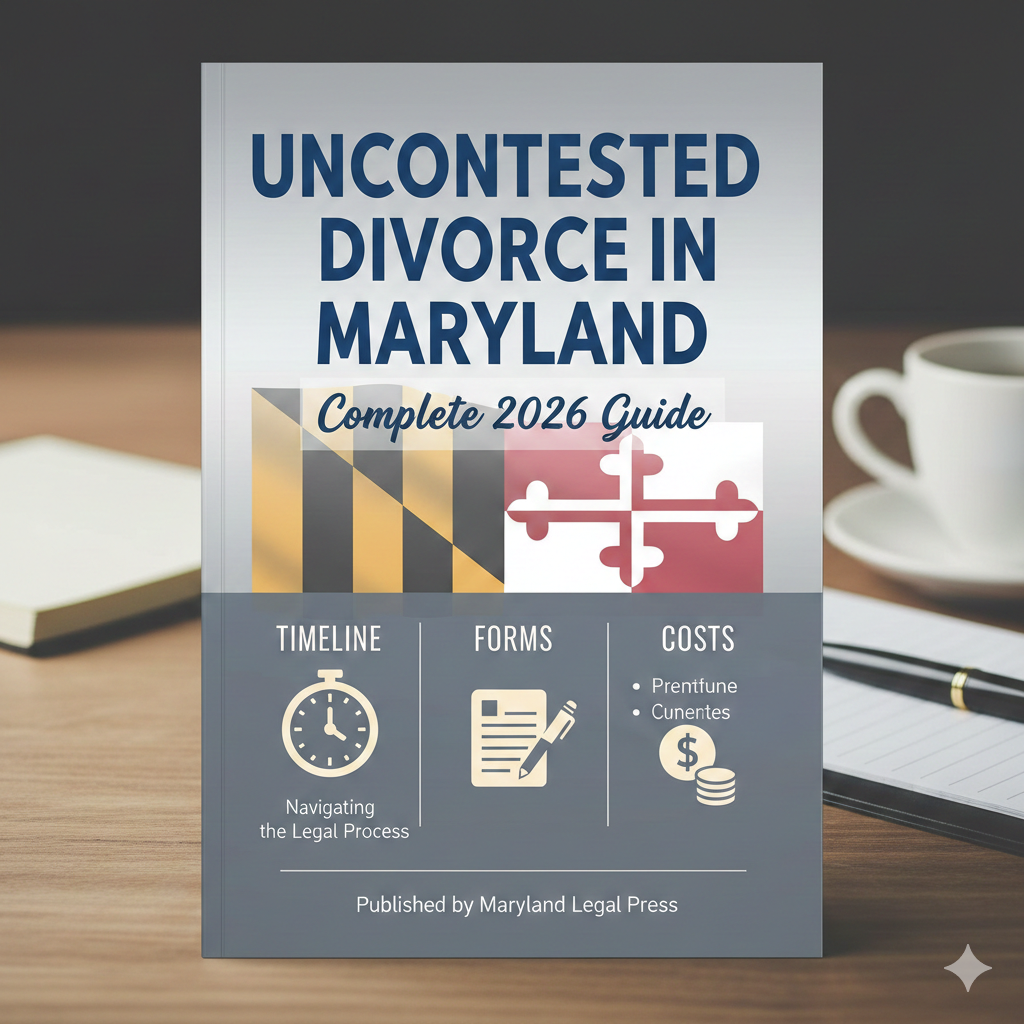
Uncontested Divorce in Maryland: Complete 2026 Guide (Timeline, Forms, Costs)
If you and your spouse agree on all the major issues—property and debts, child custody and support, and alimony—an uncontested divorce in Maryland can be more predictable and faster than a contested case. This practical guide explains the 2026 timeline, the forms you’ll likely need, filing steps, costs, and common pitfalls so you can move forward with confidence.
Summary: This article covers who qualifies for an uncontested divorce in Maryland, how long it takes (often 30–120 days), required Maryland court forms, filing and service, and FAQs—plus links to helpful internal resources and official Maryland courts pages.
Who qualifies for an uncontested divorce in Maryland?
- You have a complete written agreement on all issues (often called a Marital Settlement Agreement or Separation Agreement).
- At least one spouse meets Maryland’s residency requirements.
- Grounds for divorce are available (commonly “mutual consent”).
- There are no active disputes that require a judge to decide.
If you’re unsure whether your case fits uncontested divorce in Maryland, review our Maryland Divorce Lawyer guide or schedule a consultation for tailored advice.
Typical timeline (2026)
Timelines vary by county and court calendars, but many uncontested cases resolve in roughly 30–120 days from filing to final decree—assuming paperwork is complete and properly served.
- Week 0–2: Draft and finalize your written agreement; prepare forms.
- Week 2–4: File in the correct circuit court; serve the other spouse or proceed jointly if permitted.
- Week 4–8: The court reviews; some counties schedule a brief uncontested hearing or accept affidavits.
- Week 8–16: Hearing (if required); the judge signs the Judgment of Absolute Divorce.
Key Maryland forms and documents
Forms vary by county. Common items include:
- Complaint for Absolute Divorce (CC‑DR‑020)
- Civil Domestic Case Information Report (CC‑DCM‑001)
- Financial Statement (short or long form) if support or alimony is involved
- Marital Settlement Agreement (signed; notarized if required)
- Parenting Plan (if minor children), plus any county parenting seminar certificates
- Child Support Guidelines Worksheet (when support is part of your agreement)
- Proof of service or Acceptance/Waiver of Service
- Proposed Judgment of Absolute Divorce
For child support topics, see our internal guides on Maryland Child Support and Spousal Support.
Filing, fees, and service
- Where to file: Circuit Court for the county where either spouse resides (or where grounds occurred).
- Filing fees: Commonly around $165–$185, plus service/copy fees.
- Service: If not filing jointly, serve via an approved method (sheriff, private process server, certified mail, per county rules). A signed Acceptance/Waiver can reduce delay.
Do you need a hearing?
- Many uncontested divorces require a brief, routine hearing where one spouse testifies to residency, grounds, and that the agreement is voluntary and fair.
- Some courts accept affidavits in lieu of in‑person appearances. Check local rules.
Common pitfalls that slow cases down
- Incomplete agreement: Any vagueness on property division, debts, alimony, or custody can prompt court questions.
- Parenting plan gaps (if kids): Clarify legal custody (decision‑making), physical custody (time‑sharing), holidays, transportation, and communication.
- Child support math errors: Use Maryland’s Child Support Guidelines accurately, including health insurance, child care, and extraordinary expenses.
- Service missteps: Improper service or missed deadlines can stall your case.
- Signature/notary issues: Some documents require notarization or original ink signatures.
Strengthen your plan with our Child Custody Plan Checklist and the Divorce With A Plan Checklist.
Costs and how to keep them down
- Finalize a thorough written agreement first.
- Use the correct county forms.
- Respond quickly to any clerk/judicial requests.
- Use mediation to resolve last‑mile disagreements.
When to consider hiring a Maryland divorce attorney
- You own a home, significant assets, retirement accounts, or a business.
- You need a clean retirement division (QDRO) or have tax questions.
- You want a parenting plan that’s durable and enforceable.
- You prefer an attorney to prepare/review your agreement and attend the final hearing.
Our Maryland divorce attorneys help streamline uncontested divorce in Maryland filings so you avoid delays.
Quick checklist before you file
- Residency and grounds confirmed.
- Complete written agreement signed (and notarized if required).
- Parenting plan finalized (if children).
- Child Support Guidelines Worksheet completed (if applicable).
- Correct county forms prepared.
- Service plan arranged (or joint filing steps ready).
- Copies made and filing fees budgeted.
FAQs
What’s the fastest an uncontested divorce can finalize?
With a complete agreement and light court calendars, some cases wrap in 30–45 days. Many resolve in 60–120 days.
Do we still need to go to court?
Often, one spouse attends a brief hearing. In some counties, affidavits can replace in‑person appearances—check local rules.
Do we have to live separate and apart for 12 months?
Modern Maryland grounds allow mutual consent divorces without a 12‑month separation if statutory requirements are met and you have a complete agreement.
Can we make changes after filing?
Minor clarifications are common if the court requests them. Substantive changes (custody, support, or retirement division) should be carefully reviewed.
How will this affect our taxes?
Divorce can have tax implications. Consider consulting a tax professional on filing status, deductions, alimony (if any), and property transfers.
Next steps
- Ready to file? Gather your signed agreement and required forms and file in the correct circuit court (see the Maryland Courts Divorce Help page).
- Prefer a quick review first? Schedule a consultation—we’ll confirm your documents are complete and positioned for smooth approval.
Resources
Authoritative external references:
Helpful internal resources: