


Introduction: Is Mediation Right for Your Maryland Divorce?
How to Prepare for Divorce Mediation in Maryland: A Practical Checklist and What to Expect is the topic of this article because mediation is a common path for Maryland couples who want to resolve divorce issues without an adversarial trial, and preparation materially affects the outcome. In this article I explain how Maryland court and private mediation typically operate, what confidentiality you can expect and what exceptions exist, the exact financial and parenting documents to gather, how to work with counsel and the neutral mediator, practical negotiation and session tactics, and the procedure for turning a mediated agreement into an enforceable court order.
How Maryland Court Mediation Works (court-ordered vs. private mediation)
Understanding whether mediation is court-ordered or private matters for logistics, cost, and timing: court-connected programs may be scheduled through the circuit court and often use approved neutrals, while private mediation gives parties flexibility to pick their mediator, location, and timing; either path aims to reach a voluntary agreement rather than a judicial determination.
Court-ordered mediation compared to private mediation
Court-ordered mediation is often part of a court’s caseflow and can be mandatory in certain family cases, while private mediation is arranged by the parties and their attorneys when they prefer control over the mediator selection and process design.
Typical mediation flow and scheduling
Mediation typically follows a staged process: intake and brief exchange of documents; an opening session with the mediator and parties (and often attorneys); private caucuses or joint sessions to exchange proposals; and preparation of a written term sheet or agreement when terms are reached.
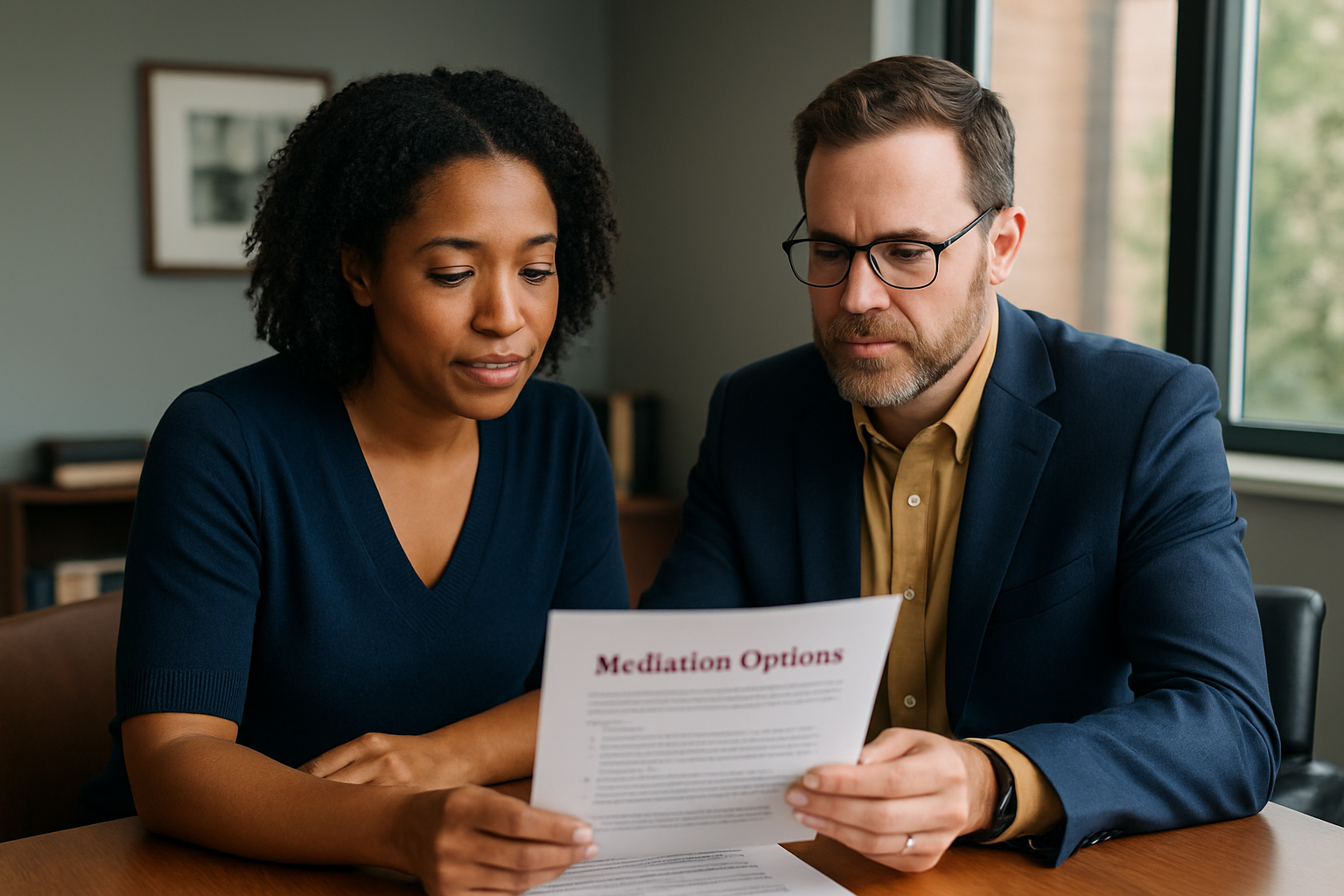
Confidentiality in Maryland Mediation: What Is and Isn’t Protected
Mediation confidentiality protects most communications made for the purpose of negotiating a settlement so parties can speak candidly, but confidentiality is not absolute and there are recognized exceptions such as disclosures required by mandatory reporting laws or threats of imminent harm, meaning parties should avoid relying on confidentiality for criminal conduct or safety issues.
What mediation confidentiality covers
Communications made during mediation — including proposals, offers, and mediator evaluations — are typically treated as protected settlement negotiations and are not admissible in later proceedings, which encourages candid discussion without immediate legal risk.
Common exceptions to confidentiality
Confidentiality usually does not shield statements that disclose ongoing abuse, intent to commit a future crime, or other mandatory reporting triggers, and parties should consult counsel before making sensitive disclosures in mediation because exceptions may apply in certain circumstances.
Documents to Bring: Complete Financial Checklist (pay stubs, tax returns, bank statements, retirement/QDRO, debts)
Bring organized financial documentation to mediation because accurate numbers form the backbone of any property division, support, or expense-sharing discussion; being prepared reduces surprise, speeds negotiations, and improves the quality of proposals you can make or evaluate.
Income and cash-flow documents
Collect recent pay stubs, an income summary, and business profit statements where applicable so parties can discuss present earnings, variable compensation, and realistic support proposals based on current cash flow rather than estimates or assumptions.
Assets, accounts, and debts
Gather bank statements, investment and retirement account summaries, mortgage and loan statements, and recent account valuations to allow the mediator and parties to map marital and separate assets and to identify liquidity constraints that might affect settlement options.
- Pay stubs and a year-to-date income summary to show current earnings and payroll deductions, which help assess support and budget realities.
- Most recent federal income tax returns and schedules to provide year-over-year income documentation and clarify self-employment or investment income sources.
- Bank and brokerage statements spanning several months to demonstrate balances, cash reserves, and transaction patterns relevant to division and interim needs.
- Mortgage, deed, and property statements that show loan balances, ownership, and encumbrances to inform realistic options for home retention, sale, or buyout proposals.
- Retirement plan summaries and any beneficiary forms; copies of plan contact information help the parties evaluate valuation and distribution methods and whether a separate order will be required.
Retirement plans, pensions, and QDRO considerations
Bring benefit statements and plan contact information because retirement accounts often require a separate qualified domestic relations order or administrative paperwork to transfer or divide benefits, and early engagement with plan administrators prevents surprises after an agreement.
Preparing a Parenting Plan: Using Maryland’s Parenting Plan Tool and Sample Schedules
Prepare a parenting plan that addresses routines, decision-making, and conflict resolution and bring proposed schedules and a written parenting plan draft to mediation so the mediator and the other parent can assess realistic arrangements that serve the children’s stability and the parents’ workable expectations.
Creating realistic schedules
Propose schedules that reflect each parent’s work and travel obligations and include school-year and holiday variations, pick-up/drop-off logistics, and buffering for unexpected events to reduce friction and support enforceability of the plan.
Addressing expenses and decision-making
Define who pays for which expenses and how major decisions are made — specifying primary decision-maker areas and a dispute-resolution mechanism for disagreements helps prevent rapid escalation when parents disagree about education, medical care, or extracurricular commitments.
Working with Counsel and Understanding the Mediator’s Role
Know the mediator’s neutrality and your right to counsel before mediation: a mediator does not represent either party and cannot provide legal advice, so parties often bring attorneys to receive legal guidance before, during breaks, and after sessions to protect rights and evaluate offers.
What the mediator can and cannot do
Mediators facilitate negotiation and clarify options but do not make binding decisions for the parties, issue court orders, or serve as a substitute for independent legal advice when legal rights and long-term consequences are at stake.
How attorneys typically participate
Attorneys can attend mediation with you to provide legal perspective, suggest alternative language for agreements, and help understand statutory principles that may inform settlement ranges, while stepping back to let the parties negotiate toward a voluntary resolution.

Practical Session Tips: Negotiation tactics, communication, and self-care
Enter mediation with realistic proposals and clear priorities — decide your non-negotiable items ahead of time and identify areas where you can compromise, prepare opening offers that are principled rather than punitive, and practice concise, fact-based communication to keep discussions productive.
Negotiation tactics that work in mediation
Use objective anchors and trade-offs rather than ultimatums — present proposals tied to documented facts or shared goals, and offer reciprocal concessions on lower-priority items to build momentum toward a comprehensive agreement.
Managing emotion and logistics during sessions
Plan for breaks and have a support system outside the room because mediation can surface strong emotions; scheduling shorter sessions, arranging childcare and transportation, and debriefing with counsel between sessions helps you stay focused and prepared.
If You Reach Agreement: Turning a Mediated Settlement into a Court Order
A mediated agreement is first and foremost a written contract between the parties and becomes enforceable as a court order only after the parties present it to the court and the court approves incorporation into the divorce decree or a separate order, so plan for follow-up steps to ensure compliance and finality.
Preparing a clear written agreement
Document all essential terms in writing including property division specifics, support terms, parenting arrangements, and the process for future disputes; clarity now prevents confusion and reduces the likelihood of enforcement litigation later.
When special paperwork is needed
Recognize when ancillary documents are required — retirement distributions or certain account transfers often need administrative orders or plan-specific forms, and clarifying those steps during mediation avoids post-approval delays.
If Mediation Fails: Next Steps, timelines, and court procedures
If mediation does not produce agreement the case typically returns to the court’s scheduling process where the parties may proceed through discovery, additional ADR options, or toward trial, and the record of mediation communications generally remains confidential and not admissible in later proceedings.
Options after unsuccessful mediation
Explore additional ADR or limited-scope mediation for discrete issues, consider targeted expert involvement for valuation or custody assessments, and review whether focused negotiation on high-impact items may still resolve the case without a contested hearing.
Preserving legal positions and evidence
Continue appropriate discovery and documentation so you preserve legal options and support any later arguments; careful financial disclosure and contemporaneous records remain essential whether you settle later or litigate.
FAQ — Common Maryland-Specific Questions About Divorce Mediation
Below are concise answers to frequent questions Maryland parties ask about mediation that supplement the earlier sections and highlight practical steps to take before, during, and after mediation.
What documents should I bring to divorce mediation in Maryland?
Bring income documentation, bank and investment statements, mortgage and loan records, recent tax returns, retirement summaries, and a proposed budget so you can make informed proposals and assess settlement options; being organized speeds negotiation and reduces disputes over numbers.
Is mediation confidential in Maryland and are there exceptions?
Mediation communications are generally confidential to encourage open negotiation, but there are exceptions for certain disclosures such as mandatory reporting obligations or threats of imminent harm, so avoid relying on confidentiality for illegal conduct or safety matters.
Do I need an attorney at mediation in Maryland?
You are not required to have an attorney to attend mediation but many parties involve counsel to receive legal advice, review proposed agreements, and ensure rights are protected; consider consulting an attorney before signing any settlement document.
If we reach a mediated agreement, how do we make it a binding court order in Maryland?
To make a mediated agreement enforceable, the parties typically submit the written agreement to the court for incorporation into the final divorce decree or via a separate order and ensure any ancillary administrative steps are completed for items like retirement account transfers.
What happens if mediation fails — will the court schedule a trial or other ADR steps?
If mediation fails, the case usually moves back into the court process where additional ADR, discovery, or a trial may follow and parties should plan discovery tasks and consult counsel about strategic next steps while continuing to evaluate settlement opportunities.

How to Prepare for Divorce Mediation in Maryland — Building a Strategic Plan
Preparing for mediation in Maryland starts with a plan: organize your finances, define your priorities, and build a staged negotiation strategy that separates short-term needs from long-term objectives, anticipates necessary paperwork or administrative orders, and defines where you will compromise and where you will stand firm; strategic preparation reduces surprises, accelerates settlement, and helps protect your interests while allowing the parties to control the outcome rather than leaving decisions to a judge. If you’d like personalized guidance to develop a mediation strategy for your circumstances, schedule a consultation with Divorce With a Plan to map the sequence of steps, identify required documents, and plan negotiation tactics tailored to your case.
Frequently Asked Questions
These are the questions Maryland families ask most often about this topic. Each answer is general information rather than advice about a specific case, and the right approach always depends on the details of your situation.
What documents should I bring to divorce mediation in Maryland?
Bring current income documentation, recent tax returns, bank and investment statements, mortgage and loan records, retirement summaries, and a proposed household budget so you can present reliable numbers and make realistic settlement proposals.
Is mediation confidential in Maryland and are there exceptions?
Mediation communications are generally confidential to encourage open negotiation, but exceptions exist for mandatory reporting, disclosures of imminent harm, or other legally required disclosures, so consult counsel before making sensitive statements.
Do I need an attorney at mediation in Maryland?
You are not required to have an attorney, but many parties bring counsel for legal guidance during breaks and to review any proposed agreement; having counsel helps you understand long-term legal consequences before signing.
If we reach a mediated agreement, how do we make it a binding court order in Maryland?
A mediated settlement becomes enforceable after the parties reduce it to a written agreement and submit it to the court for incorporation into the divorce decree or a separate order; some assets also require administrative paperwork.
What happens if mediation fails — will the court schedule a trial or other ADR steps?
If mediation does not produce an agreement, the case typically returns to the court schedule for discovery, additional ADR, or trial; parties should preserve records and consider targeted negotiation on key issues while preparing for next steps.
This article is for general informational purposes only and does not constitute legal advice. Maryland law changes, and every situation is unique. Consult a qualified Maryland family law attorney about your specific circumstances.