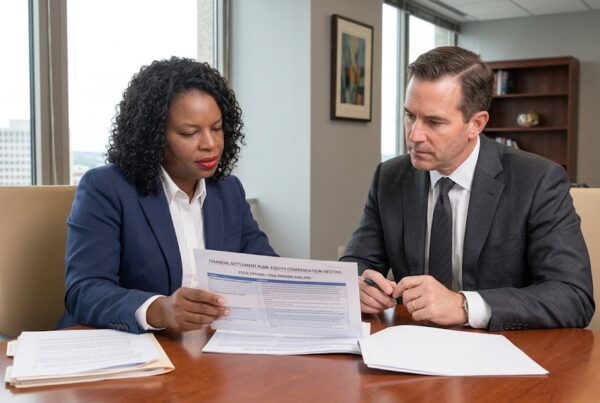

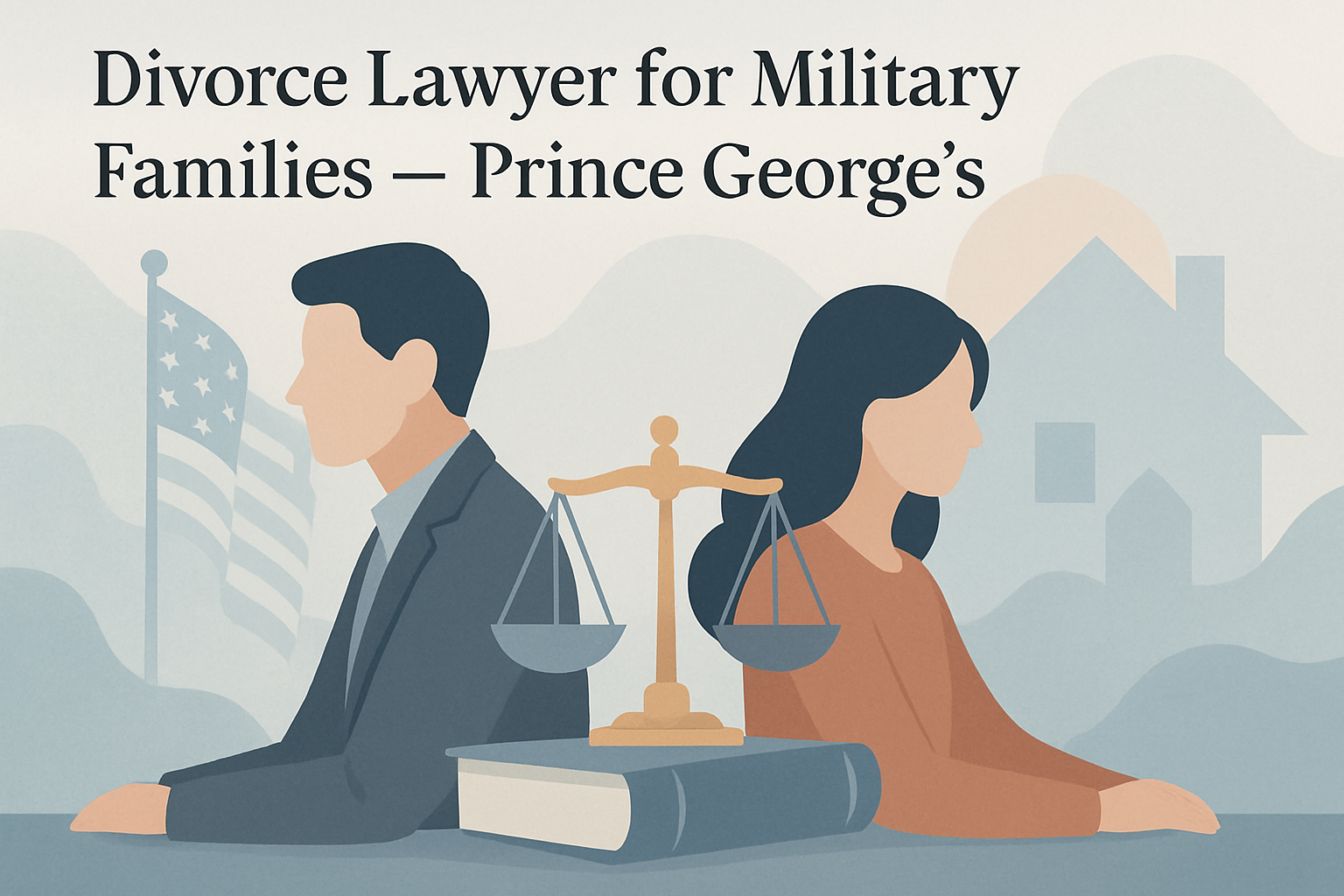
divorce lawyer for military families Prince George’s County Maryland
Overview: what this guide covers and why the focus matters
This guide focuses on how a divorce lawyer for military families Prince George’s County Maryland can plan around the facts of service, federal benefits, and Maryland family law to protect financial security and parenting time; it explains the most common military‑specific issues, the evidence your lawyer will collect, how courts typically treat retirement pay and allowances, approaches to custody and relocation clauses, and a sequence of practical steps you can take before and after filing to keep the process controlled and strategic.
Why choose counsel with military‑family experience in Prince George’s County
Military experience in an attorney’s background changes case strategy because counsel who understands federal benefits and typical service practices better anticipates valuation issues, can identify which documents prove creditable service and benefits eligibility, and sequences motions to preserve rights when orders and deployments change; choosing local counsel also brings courtroom familiarity with Prince George’s County procedures and judges who may hear your family law matters.
Common military‑specific issues that affect strategy
Military families face recurring practical issues such as dividing retirement income, protecting survivor benefits, assessing the influence of non‑taxable housing allowances on support calculations, serving a deployed spouse, and building parenting plans that survive permanent change of station moves; understanding these issues up front lets you set priorities and request targeted discovery to limit surprises during negotiation or trial.
How Maryland treats military retirement pay as marital property
Retirement pay earned during the marriage is typically treated as marital property and therefore subject to equitable distribution in Maryland; the main practical questions are how to document the portion earned during the marriage, how a court may value the retirement benefit, and which division approach—percentage division, offset with other assets, or present value settlement—best aligns with your broader financial goals and tax considerations.
Valuation and division approaches your lawyer will evaluate
An experienced attorney compares practical options including calculating the marital portion based on overlap between service and the marriage, evaluating whether periodic payments or an asset offset is preferable, and proposing settlement structures that preserve survivor protections or minimize adverse tax consequences while keeping the client’s cash flow needs in view.
Benefits and protections to address in settlement talks
Not all military benefits are divisible, but many affect the family’s security so a comprehensive settlement goes beyond a simple percentage of retirement to address survivor elections, the impact of disability compensation on household budgeting, access to health care tied to status, and whether specific allowances should be treated as income for support purposes.
Survivor benefit considerations and negotiation levers
Survivor benefit arrangements affect long‑term security because elections or waivers can change who receives ongoing income after a service member’s death; negotiation often focuses on whether survivor protection will be continued, traded for other assets, or handled through alternative forms of protection that align with each party’s priorities.
VA disability and health‑care access in settlements
VA disability compensation is generally the veteran’s income but influences budgets and may play a significant role in support negotiations because of its predictable stream and potential interaction with other benefits; health‑care eligibility tied to active or retired status should also be considered when crafting durable support and caregiving provisions.
Jurisdiction, residency, and serving a deployed or overseas spouse
Filing location and service methods require careful planning since Maryland residency rules apply and service on a deployed or overseas spouse may need special methods to ensure the court obtains jurisdiction and entered orders are enforceable; counsel will analyze the facts, propose the optimal forum, and coordinate service consistent with the rules that apply to service members.
Practical service approaches your attorney will use
A lawyer coordinates service to avoid jurisdictional challenges by using methods that comply with Maryland procedure and relevant federal provisions where appropriate, documenting service steps carefully, and preparing responses to common service defenses so the court can move forward on temporary relief and the merits without unnecessary delay.
Custody planning that anticipates PCS and deployments
Parenting plans for military families should be anticipatory and detailed to reduce later disputes because a good plan sets out how relocation will be handled, assigns temporary caregiving when a parent deploys, requires notice of official orders, and explains processes for maintaining parenting time through virtual contact and for resolving conflicts that arise from moves, school changes, or shifting schedules.
Sample clauses that reduce future motion practice
Attorneys commonly draft contingency language to preserve stability such as provisions requiring notice tied to official orders, named temporary guardianship during deployments, maintenance of virtual contact expectations, and a defined process for revising parenting schedules when a permanent change of station makes the current plan impracticable.
Support: presenting military pay and allowances to the court
Accurate representation of military compensation is essential because allowances and certain special pays affect household resources and may be treated differently than taxable wages; your lawyer gathers pay statements and other proof of compensation, explains how those items fit within Maryland support guidelines, and argues for a support result that reflects the family’s actual financial picture.
What counsel will collect and how it is used
Your attorney will request documentation that shows total compensation including base pay, housing and subsistence allowances, and any special pays that affect living expenses, then prepare a clear presentation to judges or mediators so that support calculations and spousal support considerations are based on a realistic accounting of available resources.
Document checklist to prepare for a productive consultation
Bring well‑organized records to make your consultation efficient by assembling recent pay statements, retirement estimates and service documentation, official orders and personnel records, recent tax returns, bank and investment statements, and any correspondence or court papers relevant to custody; a single digital folder or a labeled binder helps your lawyer assess the case quickly and identify targeted next steps.
- Recent pay statements and retirement estimates that show current income and projected benefits; these documents let counsel value retirement and allowances in context and plan discovery efficiently to prevent surprises later.
- Official service records and personnel orders that document creditable service and support jurisdictional and service questions; accurate service history is the foundation of retirement valuation and benefit eligibility analysis.
- Tax returns and financial statements that reveal household income streams, deductions, and assets; these records allow counsel to model support outcomes and propose equitable distribution options that match long‑term goals.
Working with military legal offices and civilian counsel
JAG offices provide important service‑member assistance but do not replace civilian court representation so a civilian attorney coordinates with JAG when helpful, explains which matters JAG can advise on, and assumes responsibility for filings, negotiations, and courtroom advocacy in Prince George’s County to protect your interests under Maryland law.
When coordination with military counsel is useful
Coordination is appropriate to clarify service‑member rights such as employment protections and benefit questions that have a federal component; your civilian lawyer uses relevant JAG input where it advances the case and ensures that legal strategies remain aligned with both federal and state considerations.
Local process and practical courtroom expectations in Prince George’s County
Local calendars and procedural practices shape how a case moves so your attorney will explain likely steps such as temporary orders, discovery requests, mediation opportunities, and hearing scheduling specific to Prince George’s County family court, giving you a realistic timeline and suggested preparation for each procedural milestone.
What to expect at an initial hearing
At initial hearings judges often focus on stability and your attorney will be prepared to propose temporary arrangements for custody and support, confirm facts that establish jurisdiction and service, and request agreed temporary orders where appropriate to preserve safety and continuity while the case proceeds toward resolution.
Settlement, mediation, and alternatives to contested litigation
Mediation and targeted negotiation frequently produce better predictability for military families because they allow parties to preserve privacy, tailor survivor protections and parenting contingencies, and structure payment streams or asset offsets in ways a judge might not, while reducing the time the family spends in court and the procedural uncertainty that arises from contested trials.
Stepwise plan: how to prepare, file, and move toward resolution
A staged approach keeps the process manageable by starting with a focused consultation and document review, confirming optimal filing location and service options, seeking temporary relief if needed, prioritizing discovery on retirement and compensation records, and then using negotiation and mediation to shape a settlement that aligns with your financial and parenting objectives.
Common questions military families raise in Prince George’s County
Frequently asked questions include how retirement pay is allocated, how service members are served when deployed, and how benefits affect support and custody and your lawyer should answer these clearly, map the documents needed to support each position, and provide a recommended sequence of motions or negotiation topics that reduces risk and preserves options for future modification if circumstances change.
divorce lawyer for military families Prince George’s County Maryland
Handling a military family divorce the right way starts with a plan—strategic preparation, careful staging of filings, and a focus on durable solutions reduce uncertainty and protect what matters most; a lawyer who builds a personalized plan will explain likely steps, tailor discovery to the biggest financial and parenting questions, and present settlement options that protect survivor considerations and cash flow while preserving parenting continuity, and if you would like a structured conversation about your situation, schedule a consultation with Divorce With a Plan so we can build a strategy aligned with your priorities.
This article is for general informational purposes only and does not constitute legal advice. Maryland law changes, and every situation is unique. Consult a qualified Maryland family law attorney about your specific circumstances.