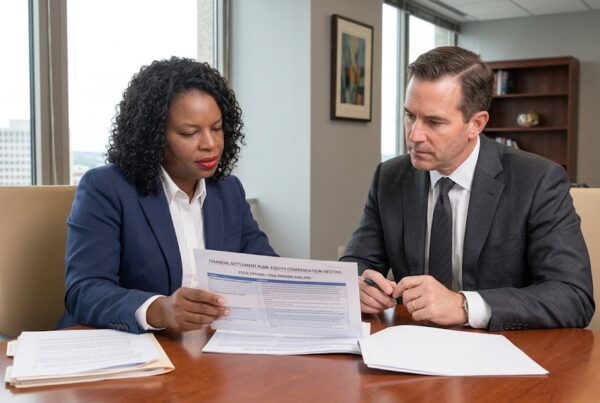


Divorce Lawyer Financial Protection: The Essential Guide
Introduction: what divorce lawyer financial protection means and why it matters
Divorce lawyer financial protection describes a premeditated, practical approach that prioritizes containment of risk, careful documentation, and staged coordination with financial professionals so your economic position is preserved while legal options remain open; this is especially important in Maryland where courts evaluate property and support with financial records and where early choices shape negotiation leverage and potential tax outcomes. Here is what this article covers: the role of a financially focused attorney, early preservation actions that matter, what documents to gather for effective intake, how to coordinate CPAs and valuators without duplicating work, negotiation techniques that reduce future disputes, and how to convert a short plan into actionable steps you can follow with counsel and advisors toward a stable, staged outcome.
Why a divorce lawyer financial protection approach matters
A financially focused strategy matters because the earliest legal and financial moves set the range of viable settlements and influence tax and liquidity consequences; acting deliberately limits the potential for unilateral transfers or surprise transactions, creates an evidentiary record to support valuation positions, and preserves the ability to negotiate from a position of verified facts rather than conjecture, which is especially useful when assets include businesses, retirement benefits, or concentrated investments.
What a financially focused divorce lawyer does
A financially focused attorney translates complex asset pictures into a staged legal plan: contain risk, obtain and secure critical records, coordinate valuation and tax analysis, and execute targeted legal measures when necessary, while keeping work proportionate so expert spending ties to decisions that materially affect settlement outcomes.
Core capabilities to look for
Look for lawyers who combine family-law experience with financial literacy and an established advisory network so they can efficiently triage issues, explain valuation options, and determine when forensic or tax expertise is necessary to support negotiation or court filings.
- Experience handling high-asset matters and tracing complex flows, with the ability to prioritize which financial threads matter most to settlement or litigation strategy rather than treating every discrepancy as equally urgent.
- Established relationships with CPAs, business valuators, and financial analysts so expert work is sequenced and scoped to avoid duplication and to deliver focused, usable reports for mediators or judges.
- Practical drafting skills for narrow temporary relief, preservation letters, and settlement clauses that protect accounts and define valuation methods without needlessly escalating conflict.
- Clear communication skills to translate technical financial positions into concise narratives for mediators, judges, and opposing counsel so disputes hinge on documented facts, not expert theatrics.
Early actions that shape outcomes
Early actions begin with a confidential assessment and an ordered sequence: stabilize and preserve assets, create a prioritized document inventory, communicate roles to advisors, and only then proceed to valuation or temporary relief if necessary; sequencing matters because containment without hasty litigation conserves leverage and reduces unnecessary expense while keeping your options open.
An early sequence to follow
Begin with an intake that identifies immediate risks, then create a short plan that lists containment steps, documents to secure, and a timeline for advisor engagement so steps occur in a controlled, defensible order and you avoid both rushed transfers and paralysis that allows dissipation.
Detecting and preventing asset dissipation
Preventing dissipation combines tactical preservation with evidence gathering: counsel can send targeted preservation letters, alert financial institutions where appropriate, and build an audit-ready record that shows the flow of funds and supports any later claims about concealed or improperly transferred assets.
Practical steps to locate hidden accounts or transfers
Use transaction logs review of electronic statements, wire confirmations, and reconciliations, and work with a forensic-minded CPA to identify atypical flows so you can trace transfers and determine whether additional subpoenas or preservation actions are warranted to protect recovery options.
When to involve forensic experts
Engage forensic experts when initial review uncovers irregular flows or complex business transactions that are central to division questions; early engagement speeds identification of decisive records and often reduces the cost and uncertainty of reconstructing activity long after transactions occurred.
Asset classification and valuation basics
Classification and valuation are sequential: you must characterize assets before valuing and then consider division methods, so an effective protection plan traces inheritances, premarital contributions, gifts, and commingling issues to reduce surprises and to present valuation positions that are defensible in negotiation or court.
Common valuation challenges
Valuation issues for business interests, deferred compensation, concentrated stock, and illiquid real estate require tailored approaches and careful coordination with tax advisors so appraisal dates, assumptions, and discounting methods align with negotiation goals and anticipated tax consequences.
Protecting income streams and parenting stability
Financial protection when children are involved includes securing income-related benefits, modeling support scenarios with a financial professional, and using limited legal arrangements to ensure that funds for education, healthcare, and childcare are available while custody matters are being resolved.
Keeping access to essential funds
Temporary financial arrangements can grant access to joint accounts or establish short-term budgeting rules that provide predictable funds for living expenses and child needs while you pursue a longer-term financial settlement, which helps stabilize household finances and reduce contentious pressure on decision making.
What to gather before your first meeting: a practical checklist
Being prepared accelerates strategy work: bring an organized set of documents that shows ownership, recent transfers, and benefit summaries so your attorney can quickly assess liquidity, liens, and risk areas and produce a short containment plan tailored to your circumstances.
Key documents to collect
Collect representative records such as recent bank and investment statements, retirement summaries and beneficiary information, tax filings with supporting schedules, business financials and ownership agreements where applicable, property records and loan information, digital transaction histories, and employment compensation materials so counsel can prioritize discovery and expert work efficiently.
- Bank and investment statements that reveal recurring transfers, withdrawals, and account owners so counsel can identify suspicious movements and preserve relevant records with minimal delay.
- Retirement and benefit summaries and beneficiary documentation so valuation and division discussions start from accurate ownership facts rather than assumptions about entitlement.
- Business records including profit and loss overviews, ownership agreements, and distribution histories so valuation scopes are grounded in the company’s practices and not speculative estimates.
- Property documentation and loan records that show encumbrances and equity positions to avoid surprises during division and to inform tax and liquidity planning during settlement talks.
Coordinating with CPAs, financial advisors, and CDFAs
Coordination minimizes duplication and preserves privilege: the lawyer manages legal strategy and privilege, the CPA models tax consequences and prepares schedules, and the financial advisor or certified divorce financial analyst models cash flow and retirement scenarios so each advisor contributes clear, discrete deliverables aligned to negotiation milestones.
How to structure advisor communications
Set clear protocols that define which communications are privileged, who prepares what analysis, and when joint meetings occur so advice is coordinated, documented, and defensible, and so expert work is only paid for when it meaningfully advances settlement or the trial position.
Negotiation tactics that prioritize protection
Negotiation is where long-term protections are embedded: use staged exchanges that secure interim protections, include preservation clauses, and adopt precise valuation definitions so settlements allocate tax and liquidity burdens predictably and reduce vague language that can trigger re-litigation.
Drafting provisions that reduce re-litigation
Include precise standards in settlement drafts: defined appraisal methods, specific valuation dates, clear disclosure timelines, and agreed dispute-resolution mechanisms so parties have a defined path for resolving valuation controversies without immediate recourse to court intervention.
Using temporary orders strategically
Temporary measures and voluntary separation terms can stabilize accounts and retirement plans, secure child-related expenses, and permit limited distributions for necessary living costs, creating a preserved status quo that supports thoughtful negotiation rather than reactive splits.
Preparing for court: evidence, experts, and budgeting
Court preparation emphasizes high-impact evidence: transaction histories, contemporaneous business records, focused expert reports, and clear income accounting so expert expenses are phased to deliver decisive information only when it alters settlement prospects or trial strategy appreciably.
How to keep litigation costs reasonable
Control expert spend by scoping discovery narrowly to high-yield items, engaging experts in stages from scoping review to deeper valuation only if needed, and pursuing mediation or targeted evaluations to resolve discrete disputes without the need for full trial preparation when resolution is practical.
Common mistakes that undermine protection (and how to avoid them)
Common mistakes include delaying counsel, making significant unilateral transfers, or closing accounts without advice; avoiding these missteps preserves leverage, maintains credibility, and reduces the likelihood of costly reconstruction or sanctions during the process.
- Do consult counsel early and assemble records promptly so risks are identified while preservation steps remain effective and before unilateral action limits options or raises credibility issues.
- Don’t move large sums without documented, legitimate business reasons and legal advice because unexplained transfers create disputes that drive expert costs and complicate settlement.
- Do preserve digital records and back up statements to ensure a defensible audit trail that supports valuation and tracing rather than forcing reconstruction from memory or fragmented files.
- Don’t rely on verbal agreements for material financial arrangements—reduce key arrangements to writing so intentions are clear and enforceable in mediation or court settings.
Putting a protection plan into practice
Turn planning into action by using a short written plan prepared at the first meeting that lists immediate containment steps, a prioritized document checklist, advisor roles, and suggested next steps so every action—preservation letters, targeted discovery, expert scoping, or negotiation exchanges—has a purpose and a measurable objective.
Divorce lawyer financial protection: planning, process, and next steps with Divorce With a Plan
Divorce lawyer financial protection handled the right way starts with a clear plan: prioritize containment, sequence advisor engagement, and set measurable milestones so decisions are deliberate, defensible, and aligned with long-term financial goals; strategic preparation reduces surprises, preserves options, and makes negotiations more predictable while limiting unnecessary expense. Personalized guidance means your attorney creates a staged process that explains what will happen, when it will happen, and how costs are likely to be controlled, and then documents that framework so you and your advisors follow a coordinated roadmap. If you would like tailored planning, consider scheduling a consultation with Divorce With a Plan to build a practical, finance-first strategy matched to your circumstances and priorities.
This article is for general informational purposes only and does not constitute legal advice. Maryland law changes, and every situation is unique. Consult a qualified Maryland family law attorney about your specific circumstances.